ABM Campaign Examples That Drive Pipeline
Article at a Glance
What is an ABM campaign?
An ABM campaign is a set of plays designed to engage accounts and move them through the buying journey. It aligns Sales and Marketing around the same targets, messaging, and next steps to drive pipeline.
What makes a good ABM campaign?
The best campaigns are repeatable. They’re built around your ideal customer profile (ICP) and tied to clear next steps. If you can’t run it more than once, it’s unfortunately just a one-off.
What are some examples of effective ABM campaigns?
Common high-performing ABM examples include webinar programs, event-based campaigns, demand activation plays, and closed-lost re-engagement. Each works because it’s structured around real account behavior and timing.
How do you choose the right ABM campaign?
Start with your goal. If you need pipeline fast, focus on closed-lost or existing demand. If you’re building awareness in enterprise accounts, webinars or events can be strong entry points. The key is matching the campaign to where accounts are.
How do ABM campaigns use the ideal customer profile?
Your ICP helps you decide which accounts are worth targeting in the first place. Even the best campaign won’t work if it’s aimed at the wrong companies.
How do you measure ABM campaign success?
Strong account-based marketing metrics focus on progression, not just engagement. That includes meetings booked, opportunities created, pipeline generated, and deal velocity.
Do you need a complex tech stack to run ABM campaigns?
No. Most teams already have the tools they need. The challenge is taking the data you have and turning it into a clear system your team can execute
Here’s the truth: Most ABM campaigns aren’t really campaigns. In reality, they’re just tactics wearing a nicer outfit.
A webinar here and there, maybe an event or gifting play if budget allows.
But without structure, none of it becomes repeatable. And if it’s not repeatable, it’s just a one-time win (or loss).
The best ABM examples are built around a clear ABM strategy, grounded in the right ideal customer profile. They’re then measured with account-based marketing metrics that tie to pipeline.
That’s what we’re getting into here. We’re breaking down a handful of practical ABM campaigns you can run again and again.
What Makes an ABM Campaign Work?
A lot of teams get tripped up and think an ABM campaign is the thing itself:
- A webinar campaign
- An event campaign
- A sequence.
But those are just formats. What makes an ABM campaign work is the structure behind it.
Because the same webinar can either generate pipeline or generate a nice attendance report no one looks at again
The difference comes down to a few fundamentals.
It starts with the right accounts
If your campaign isn’t built around a clear ideal customer profile, nothing else matters. Strong ABM campaigns prioritize fit first, then layer in engagement.
It’s tied to buying stages
Good campaigns meet accounts where they are. Early-stage accounts need education, while late-stage accounts need relevant outreach. Treating everyone the same is how campaigns stall out.
Sales and Marketing are aligned
Not “we had a kickoff call aligned.” Real alignment = shared accounts, plays, and a clear understanding of who does what and when.
There’s a clear next step for every action
Every touchpoint should lead somewhere:
- Attended a webinar → follow-up sequence
- Visited a key page → triggered outreach
- Re-engaged → prioritized by Sales
There should always be something that happens next.
It’s measurable in terms of pipeline
Clicks and registrations are nice, yes. But pipeline is better.
Strong account-based marketing metrics focus on:
- Meetings
- Opportunities
- Pipeline created
- Deal progression
Not just “XYZ seems interested…”
ABM Campaign Example #1: Turning Webinars Into a Pipeline Engine
Webinars get a bad rep in B2B.
Not because they don’t work, but because most teams treat them like one-off events instead of ABM campaigns.
You know the drill. Pick a topic, send some invites, hope people show up, then move on.
That’s where Electric Era was. Their team knew webinars should work for engaging enterprise retailers. In reality, every webinar felt like a fire drill. There was no repeatability or way to measure impact.
So instead of “doing more webinars,” the focus shifted to building a repeatable ABM campaign around them.
The structure looked like this:
- Accounts were segmented based on ideal customer profile and buying stage
- Marketing and Sales ran coordinated outreach instead of disconnected efforts
- Every touchpoint, from invites to follow-ups, was tracked and aligned
- Each webinar fed into the next step in the account journey
Webinars became a trigger within a broader ABM strategy. If the right accounts showed up, that signaled progression and triggered the right next action from Sales.
Once that system was in place, the results followed:
- $2M in net-new pipeline generated
- $10M in accelerated opportunities
- Strong engagement from enterprise accounts like Target and Walmart
As Electric Era’s VP of Marketing put it:
“We now have a repeatable program that’s a staple of our revenue generation.”
The takeaway: Webinars aren’t outdated. They’re just under-structured.
When you turn them into a true ABM campaign, they can become a real pipeline engine.
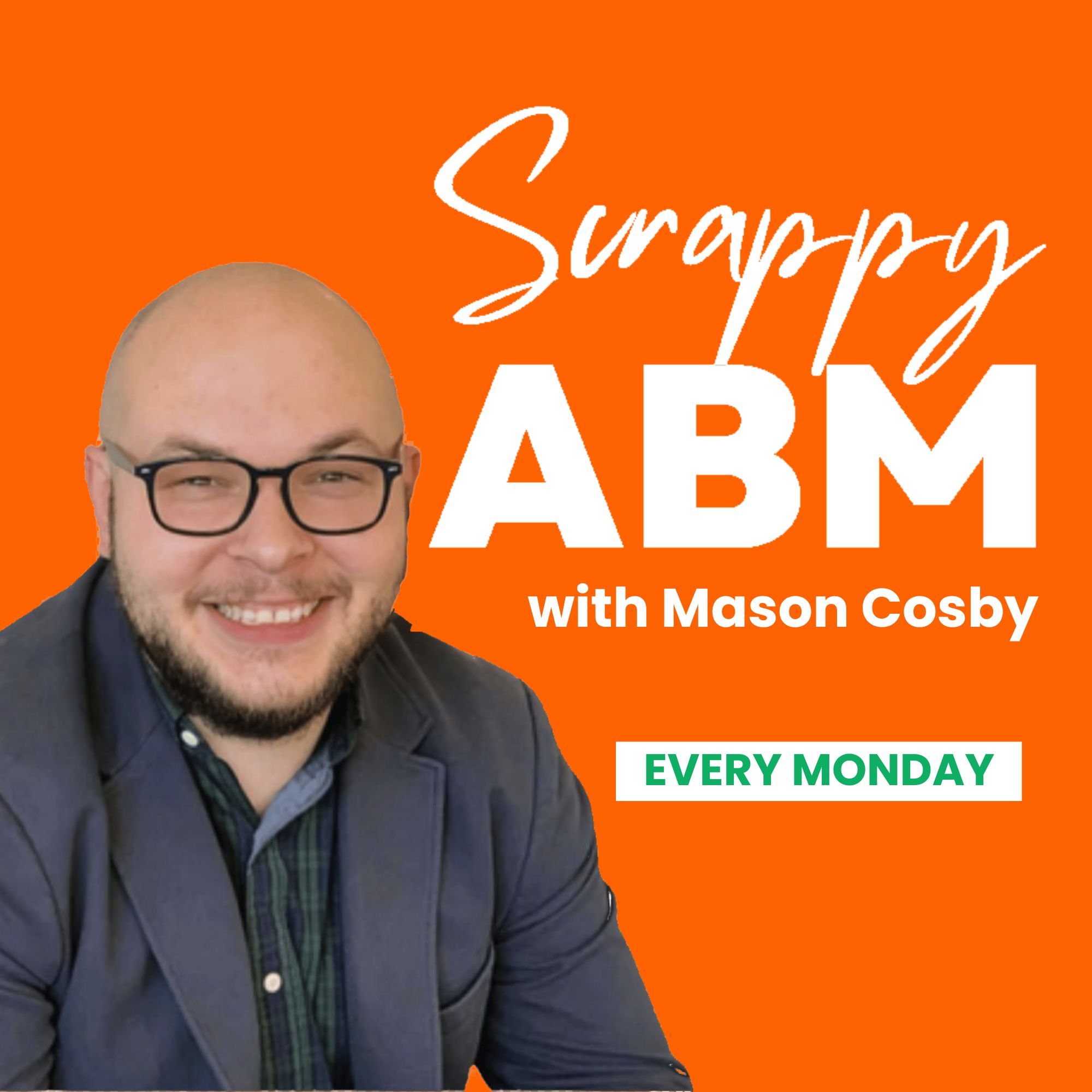
Planning & Executing Scrappy ABM Campaigns
In this episode of Scrappy ABM, host Mason Cosby dives into the steps for planning and executing a scrappy Account-Based Marketing (ABM) campaign.
ABM Campaign Example #2: Turning Events Into an Account-Based Field Motion
Events are one of those things every team wants to work.
They’re fun, and when they hit, they really hit.
But more often than not, they turn into expensive experiments. A good turnout, a few conversations, and then everyone moves on until the next one.
Andela was in this same boat.
They were already investing heavily in in-person pop-ups. The experiences were strong (yes, even Nike shoe giveaways), but the results were hit-or-miss.
The issue wasn’t effort but structure.
So instead of scrapping events, the team turned them into a focused ABM campaign:
- Guest lists were aligned to the ideal customer profile
- Sales and Marketing coordinated invites and follow-ups
- Pre-event and post-event outreach became part of a defined sequence
- Events were positioned as entry points into broader account conversations
In other words, events stopped being standalone activities and became part of a larger ABM strategy.
And that changed the outcomes.
- 74 non-Andela attendees at a featured event
- 35 customers
- 39 prospects
- Stronger engagement from priority accounts
Behind the scenes, the impact was just as important. The team gained clarity on which accounts were showing up and how they were engaging.
What used to feel like “let’s throw a great event and hope for the best” became a repeatable motion the team could run and refine over time.
ABM Campaign Example #3: Closed-Lost Re-Engagement Campaign
Gone are the days when teams treat closed-lost like a graveyard.
These accounts fit your ideal customer profile and were close enough to say “not now.” Which is a very different problem from, “Who are you?”
This ABM campaign focuses on one idea: What’s changed since the last conversation?
Instead of sending generic “just checking in” messages, outreach is tied to something real, like a market shift, product update, or new proof from similar companies. Accounts are grouped by shared context, then re-engaged with messaging that gives a clear reason to reconnect now.
Since these accounts are already warm, you’re picking the deal back up. And performance is easier to measure using real account-based marketing metrics like meetings booked and pipeline reactivated.
Closed-lost isn’t dead. It’s just waiting for better timing and a better reason to reach back out.
How to Choose the Right ABM Campaign
The truth is, there isn’t one best ABM campaign. Just the right one for where your accounts are now.
If you need pipeline fast, focus on closed-lost or existing demand. If you’re trying to break into target accounts, webinars or events can work, if they’re aligned to your ideal customer profile.
Sucessful ABM examples all have one thing in common: They’re repeatable.
So don’t overcomplicate it. Start with one campaign and one clear trigger. Run it, measure it, and improve from there.
Want a simple way to map this out? Grab the ABM Program Planning Template to align your accounts, plays, and pipeline!
Want More Resources to Help?
Planning & Executing Scrappy ABM Campaigns
Why Account-Based Marketing Works (and Why You Should Try It)
ABM Campaign Example: An Exact Program We Use at Scrappy ABM
How $3M in Generated Pipeline Fueled an Eventual Acquisition
Electric Era: Turning One-Off Webinars Into a $12M Pipeline Engine

Mason Cosby
Mason is the founder of Scrappy ABM and a longtime believer that smart strategy beats shiny tools. He's sourced $25M+ in revenue, delivered 16x ROI, and helps teams do more with less through practical, personalized ABM.