Proof Over Pain: A Different Approach to ABM
Article at a Glance
What does "proof over pain" mean in ABM?
Proof over pain is a messaging philosophy that leads with results, customer stories, and evidence instead of worst-case scenarios and fear. Instead of convincing prospects they should be scared enough to buy, you show them what's possible when they do, letting the proof do the heavy lifting.
Why do so many companies default to fear-based messaging?
Because it works in the short term, and it's easy to write. When your product solves a problem, leaning into how bad that problem can get feels like a natural starting point. The issue is that everyone in your space is doing the same thing, so you end up sounding like your competitors and wearing out an audience that's already overwhelmed.
What should you lead with instead of pain in your ABM campaign?
Customer stories, case studies, and specific proof points that speak directly to the person you're targeting. Not just their industry, but their background, connections, and what they genuinely care about. The more specific the proof, the more it lands.
How does proof-led messaging impact successful marketing results?
It builds trust over time instead of urgency in the moment. That trust compounds, and in B2B marketing, where purchase cycles can stretch six to nine months or longer, being the most trusted voice in someone's inbox matters a lot more than being the loudest one.
Where does pain-based messaging go wrong?
When it's all pain and no proof, you're just adding to the noise. Prospects hear the fear and tune it out, or worse, associate your brand with anxiety instead of solutions. Proof gives people a reason to believe, while pain alone gives them a reason to scroll past.
Somewhere in almost every B2B marketing strategy, there's a slide that says something like: "Here's what happens if you don't solve this problem."
Then it gets scary. The numbers get big, the consequences dire, and the whole thing starts to look less like marketing and more like a nature documentary where something is definitely about to get eaten.
Fear-based messaging is everywhere in B2B marketing, and it's not hard to see why. When your product solves a problem, leading with how bad that problem can get seems like the most direct path to a yes.
The problem is that everyone in your space has figured that out, too. So your prospects are sitting through an endless parade of worst-case scenarios from every vendor in the category, and the whole thing starts blurring together.
An audience that's been fear-mongered enough times stops feeling urgency and starts feeling numb.
Luckily, there's a better approach: lead with proof instead of pain. Show people what's possible, so you can build trust before urgency. It sounds simple, and it's one of the bigger mindset shifts in successful marketing. Here’s how to do it.
What Proof-Led ABM Looks Like
Proof-led ABM starts with a shift in the question you ask before every piece of outreach. Instead of "What's the worst thing that happens if they don't buy?" the question becomes "What's the best thing that happened when someone like them did?"
In practice, it means leading with case studies, customer stories, and results. The proof is the message, then everything else supports it.
It also means matching the right proof to the right person. Someone with a military background might resonate more with a veteran-led customer story than a perfectly matched industry vertical. That extra step of looking at the human you're targeting is where proof-led messaging becomes relevant.
This is where your ideal customer profile does its best work. When you know exactly who your best customers are and what they have in common, finding the proof points that resonate with the next one gets a lot easier.
Stop Selling Fear:
Why Factal's ABM Program Leads with Proof, Not Pain (with Dave Clark from Factal)
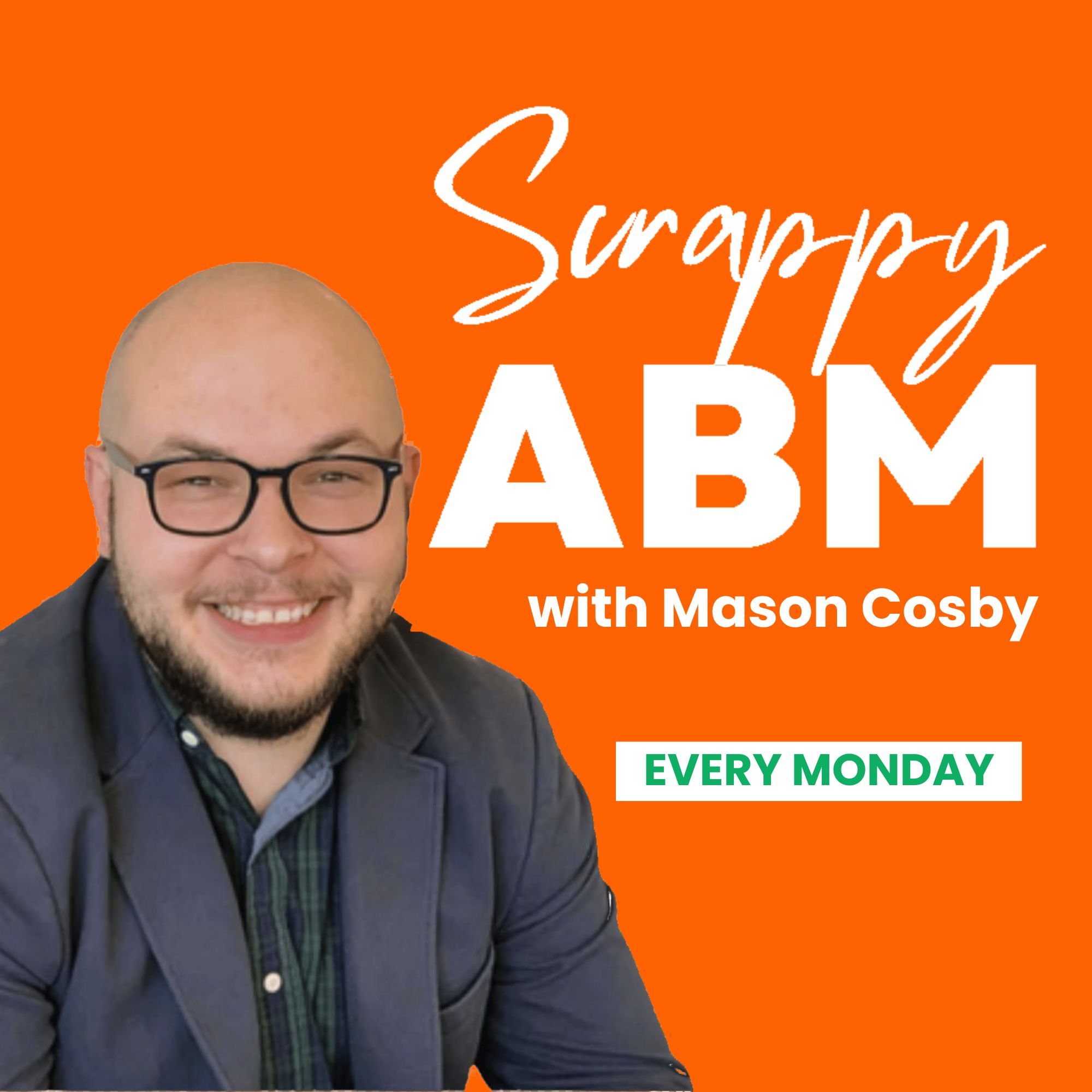
On this episode of Scrappy ABM, Mason sits down with Dave Clark, Marketing Strategist at Factal, to break down how a two-person marketing team with no dedicated ABM stack runs targeted, personalized outreach to Fortune 500 security operations centers without resorting to fear-mongering.
The Zero-Click Philosophy
Almost every marketing email ends the same way. A CTA button. A "click here to learn more" that everyone sees coming from three paragraphs away. Increasingly, nobody’s clicking it.
The zero-click philosophy flips that around. Instead of designing every piece of content around getting someone to take an action, you design it around giving them something worth having, even if they do absolutely nothing with it. In practice, that looks like:
- An email that shares useful industry information with no ask attached
- A conference-specific send that gives practical advice about the city they're traveling to, with your product mentioned once
- A newsletter that shows expertise on a topic your audience cares about, just because it's useful
The counterintuitive part is what happens next. When you stop chasing clicks, engagement goes up, and people start associating your brand with value instead of pressure. When they're ready to buy (which in B2B marketing can take six to nine months or longer), you're the most trusted voice in their inbox.
Sometimes, successful marketing is about being the one sender people look forward to hearing from.
How to Build Trust Through Content
Developing trust through content means occasionally creating things that have nothing to do with what you sell. Content that's useful because it’s made to help people, not because it's a setup for a pitch. Some ideas:
- Featuring real people and expertise instead of hiding behind a brand voice that could have been written by anyone
- Creating content around your audience's world, aka their industry challenges, day-to-day realities, even their mental health and burnout, not just your product's features
- Showing up at the intersection of what you know and what they care about, even when there's no direct line back to revenue
This kind of content does something product-focused content rarely does: it makes people feel understood. In crowded or high-stakes industries where everyone is competing for the same attention, being the brand that treats people like humans instead of pipeline is a differentiator.
It takes patience, and doesn't always tie cleanly to an ABM campaign or closed deal. But it compounds, and the trust it builds tends to show up when it matters most.
Be the Voice That Doesn't Scare Anyone
Fear gets attention. It always will. However, in a B2B landscape where everyone in your category is leading with worst-case scenarios, the brand that shows up with proof, value, and helpfulness is the one that stands out.
So before you write the next email that leads with everything that could go wrong, ask what you could show them instead. Give them a reason to trust you that has nothing to do with being scared. That's successful marketing, and it's a lot more fun to create.
Then grab our ABM Program Planning Template to start mapping out a proof-led program your team can implement!
Want More Resources to Help?
ABM Campaign Example: An Exact Program We Use at Scrappy ABM
The Best Places to Find High-Intent Accounts for ABM
The Framework You Can Use for Better ABM Content
The Framework You Can Use for Better ABM Content
An ABM Content Checklist Most Teams Skip
A Messaging Problem That Can Kill an ABM Program

Mason Cosby
Mason is the founder of Scrappy ABM and a longtime believer that smart strategy beats shiny tools. He's sourced $25M+ in revenue, delivered 16x ROI, and helps teams do more with less through practical, personalized ABM.